What Goes in Your FOGO Bin
What can go in your FOGO bin?
The new FOGO bins will take both food and garden waste.
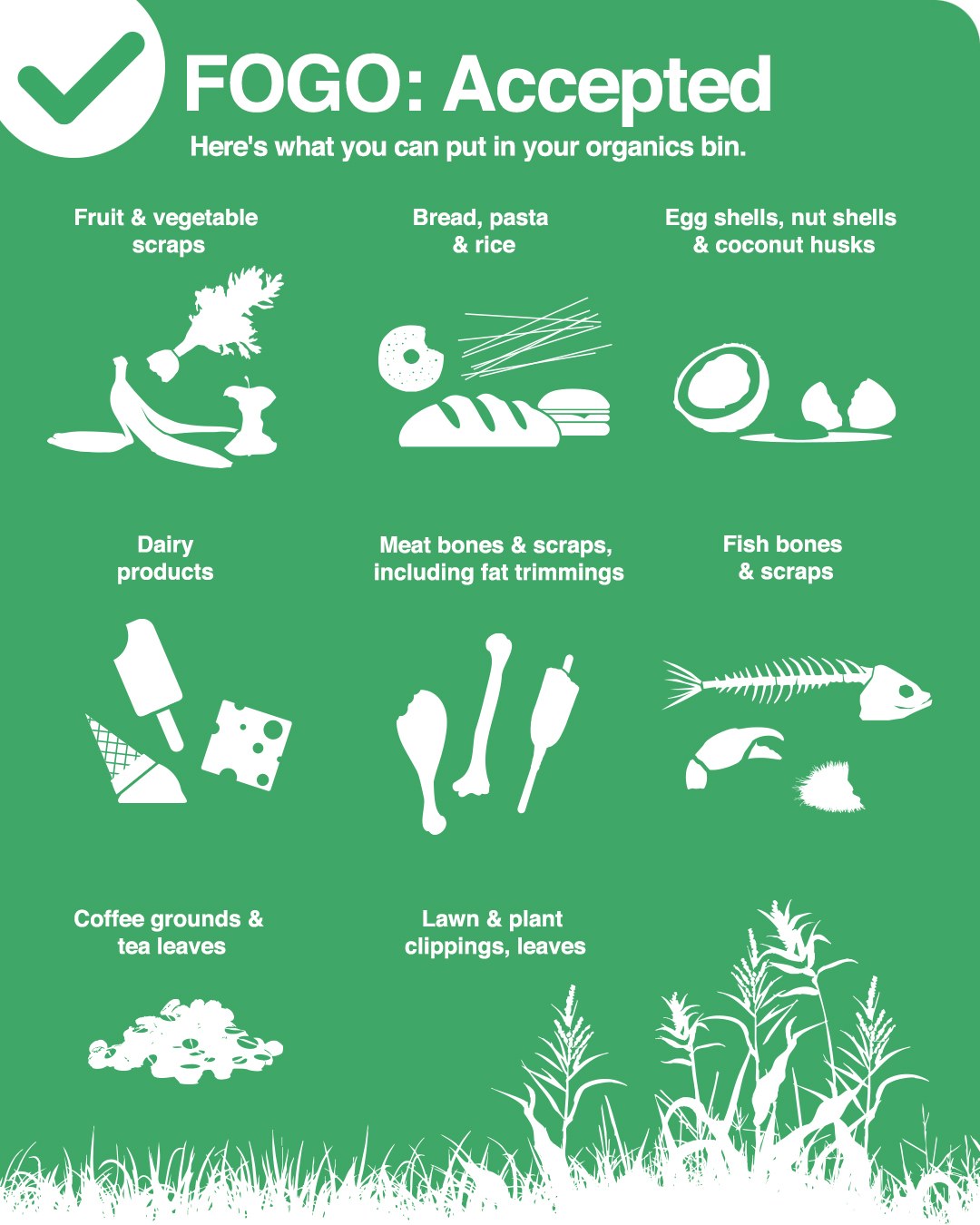
Food waste accepted:
- Fruit and vegetable scraps, including peelings, cores, stalks and skins
- Bread, pasta and rice
- Dairy products
- Meat bones and scraps, including fat trimmings
- Fish bones and scraps
- Egg shells, nut shells and coconut husks
- Coffee grounds, tea leaves.
Garden waste accepted:
- Lawn clippings
- Small soft branches, twigs (the maximum size for branches and/or logs is 5cm in diameter).
- Leaves
- Weeds.
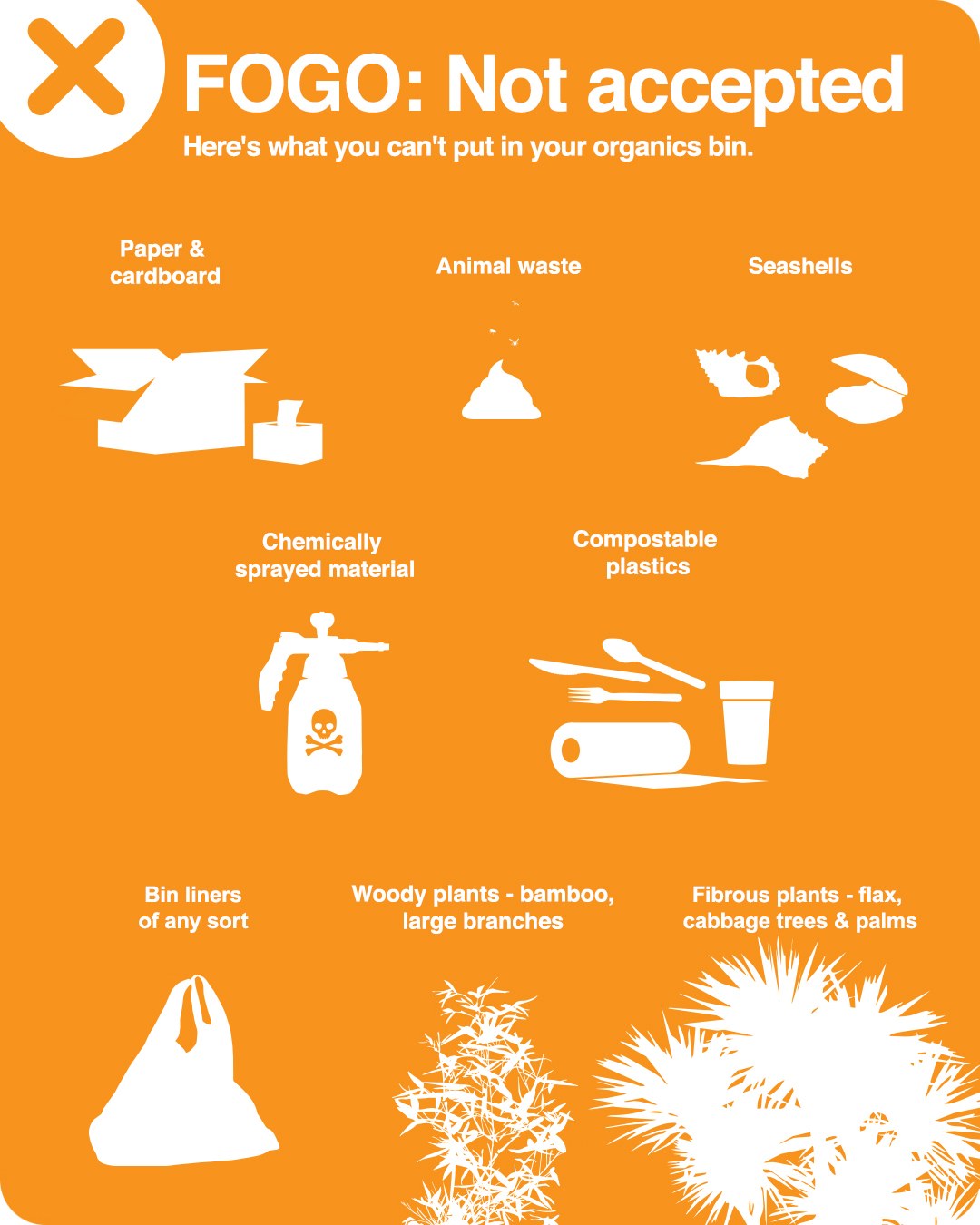
What should NOT go in your FOGO bin?
- Bin liners of any sort
- Plastic bags, bottles, trays, containers, wrap, strapping or plant pots
- Fast food wrappers, bags and boxes with a plastic or wax coating
- Treated wood, timber, sawdust, wood shavings, large logs or stumps
- Bricks and concrete
- Flax, palm, cabbage tree and rhubarb leaves
- Gravel and dirt/soil
- Metal objects
- Disposable nappies
- Liquids like cooking oils
- Tea bags (these often have plastic in them - only loose leaves can go in)
- Paper and cardboard including kitchen paper towels, hand towels and serviettes, shredded paper, food-soiled cardboard containers
- Compostable packaging including compostable plastic products or packaging, compostable paper or cardboard products or packaging, compostable labels
- Human or animal waste
- Ash
- Soil
- Coffee/takeaway cups or lids
- Seashells
- Fibrous or woody plants – see details below
- Garden material likely to contain chemical spray or residue
- Insulation, including wool-based products.
Where will the organic waste be taken?
The waste from FOGO bins will be taken to Ecogas in Reporoa and processed using anaerobic digestion. The facility generates electricity, heat, biogas and fertiliser as a by-product, closing the food and energy loop by returning nutrients back into local soils.
Watch this video to see more about what Ecogas does.
Can I put compostable products (e.g. bags/doggie poo bags, baking paper, wet wipes, coffee cups) in my FOGO bin?
No. Biodegradable/compostable bags, liners, products and packaging should not go in the FOGO bin. These will generally have a paper or plastic base (materials which are not accepted in this bin) - these all go into the red bin for landfill.
What can I do to stop my bin from smelling?
There are a number of things that can help reduce odour from your FOGO bin, including:
- Reducing food waste before the bin is needed – use leftovers before they expire, take care in food purchasing and preparation to reduce waste
- Keeping a dedicated ‘food scraps’ container in the bottom or your fridge or freezer to chill smelly items until collection day
- Layering scraps with garden waste
- Sprinkling scraps with baking soda
- Hosing out the bin after each collection
- Storing the bin in a shady spot and keep the lid closed.
Can I use a bin liner?
No, bin liners of any kind should not be used as they cannot be accepted for FOGO processing.
None of the materials which might be used to line a bin or wrap waste (e.g. plastic, compostable plastic, paper) are able to be accepted for this processing and it is very difficult to get these out once they're mixed in with collections.
Give your FOGO bin a rinse out with the hose after each collection to reduce build-up of residue and odours. You can use newspaper to wrap food scraps.
How is the FOGO bin different to a compost bin?
FOGO bins can work in compliment with home composting systems you might be using at home. There are many food materials which are not recommended for home composting (unless you are using a bokashi system) which can be put into your FOGO bin. These include for example:
- Meat and bones
- Processed foods
- Dairy products
- Problematic weeds, lawn clippings, citrus, onions and other items which can cause problems with your compost if used too heavily.
How do I know I’m putting the right stuff in?
Random checks will be undertaken on bins to ensure the correct materials are inside.
Your bin may be stickered if there are significant issues with the contents. The sticker should say what materials were found – and whether the bin was able to be emptied or not. Significant contamination will likely mean your bin is not emptied, as this would introduce too much wrong material into the truck body. If this happens, you will need to remove problem material and wait until your next collection day. In most cases, collection trucks will not return to collect bins which have been stickered for that collection.
If you need help with correct sorting of your waste and recycling, please get in touch with Council (07) 348 4199 – we want to help!
Think you know your jam jars from your pizza boxes? Put your bin skills to the test with our wheelie fun sorting game!
Can I put 'pest plants' in my FOGO bin?
Yes. Most common pest plants found in residential gardens can be placed in the FOGO bin without affecting the digestion process or the quality of the resulting fertiliser.
However, tougher plant materials such as flax, palm fronds, and cabbage tree leaves must not go in the FOGO bin. These should be taken to the landfill transfer station instead, as they are not considered green waste.
Additionally, large woody material, regardless of species, should also be excluded because it is not suitable for FOGO processing.