


Reducing Waste
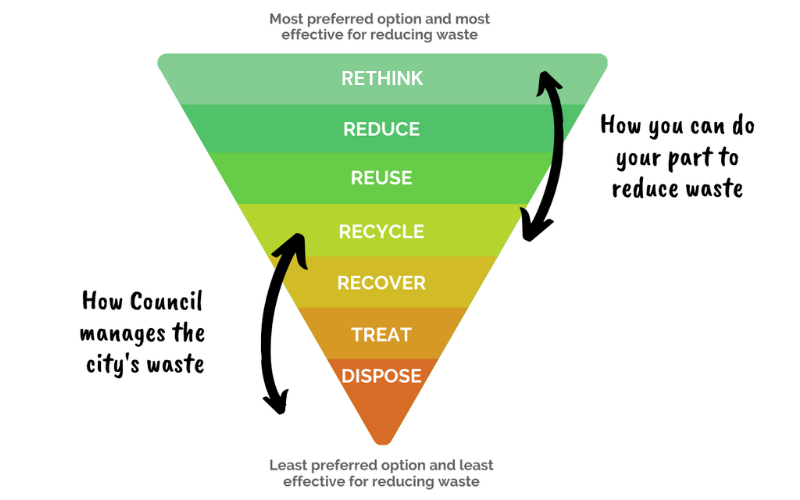
The waste hierarchy shows the most effective ways to reduce waste generation and impact. Rethinking and reducing waste are right at the top, and will always be the best options for preventing environmental harm from our activities and decisions.
At home
- Reflect before you buy – do you need this? Be aware of what its path will be after use and check if there are options which have a better end-of-life outcome.
- Be aware of and reduce food waste. The average Kiwi family throws away three shopping trolleys worth of edible food each year – in Rotorua specifically, about a quarter of what we throw away is food. Love Food Hate Waste offer some great tips and strategies.
- Set up share networks among friends and family. Talk about ‘sometimes items’ you could share and borrow from each other to avoid everyone buying their own, e.g. camping gear, tools, yard equipment, sports and leisure gear.
- Set up swap schemes with friends and family for toys, books, clothing and other household things. Sometimes we dispose of these items because we’re bored of them – but they’d be novel for someone else!
- Opt for reusable products over single use wherever you can, for example nappies, sanitary products, kitchen cloths.
- Before you buy a new device or appliance, see if your current one can be repaired. If you need to buy another, start with businesses who sell refurbished items. Often things end up with them because of an issue which they can easily fix for resale. If you do need to buy new, go for the best quality you can afford.
- Reflect with friends and family in how you do gifts and celebrations – are gifts needed on every occasion? Could you better emphasise experience over stuff to reduce waste?
- Swap bottled products for bars e.g. hand soap, dish soap, shampoo/conditioner, moisturisers, deodorants, cleaning products. Many of these have paper-wrapped options or can be made at home.
- Keep ice-cream and other sturdy plastic containers for storage. Recycling is great, but reuse is higher up the waste hierarchy.
At work
- Drive waste minimisation into procurement policy and processes. Know the life cycle of things you buy and scan regularly for better options. If there aren’t any, ask suppliers to look into it.
- Monitor other policies and processes to ensure they aren’t enabling waste. Design waste out when opportunities present.
- Partner with other organisations to reduce waste e.g. through equipment sharing, donation of retired resources, bulk purchasing, supplier liaison, shared diversion strategies.
- Remove any unnecessary single-use items e.g. disposable cups, stir sticks, sugar sachets. Have reusable crockery, cutlery and containers available to serve these needs.
- Document your organisational intentions in waste minimisation and keep staff updated on progress made. Include this in induction material so new staff know your position on waste from day one.
At school
- Include waste minimisation in procurement policy and processes. Know the life cycle of things you buy and scan regularly for better options. If there aren’t any, ask suppliers to look into it.
- Partner with nearby schools to reduce waste e.g. through equipment and resource sharing, bulk purchasing, shared diversion strategies.
- Document your intentions in waste minimisation and keep everyone updated on progress. Include this in enrolment information so new students and families know your position on waste from day one.
- Minimise laminating of short-term resources, as this turns recyclable paper into landfill plastic. Zip-lock bags will still protect the paper but can be swapped out for new contents for reuse when material is updated.
- Stop using glitter.
When out and about
- Get into the habit of taking a drink bottle with you. Download the Refill NZ app to identify nearby businesses that will allow you to fill your water bottle for free.
- Pack snacks from home to avoid buying convenience food in single-use packaging. Take a keep cup if you think you may want coffee. Many food venues will also allow you to use your own containers for takeaway foods (call ahead to find out). Or, if you get hungry and do not have these items with you, consider taking some time to just dine in.
- Keep a reusable carry bag and cutlery kit in your bag or car for those moments of unplanned purchase. Paper bags and bamboo cutlery can have a better end-of-life outcome than plastics, but they are still ultimately designed for short-term use and destined for landfill.
- Take your own container for bulk bin and deli foods at the supermarket. If you need to use bags or containers provided, take them back next time to re-use as many times as you can (particularly if you buy the same products frequently, they’ll already be labelled with the code you need).
At birthdays and celebrations
Rotorua Lakes Council Waste Services has a reusable party kit you can borrow, containing cups, plates cutlery, serving platters, drink jugs and decorations (for up to 20 guests).
Email recycling@rotorualc.nz to book this for your next party!
At galas and events

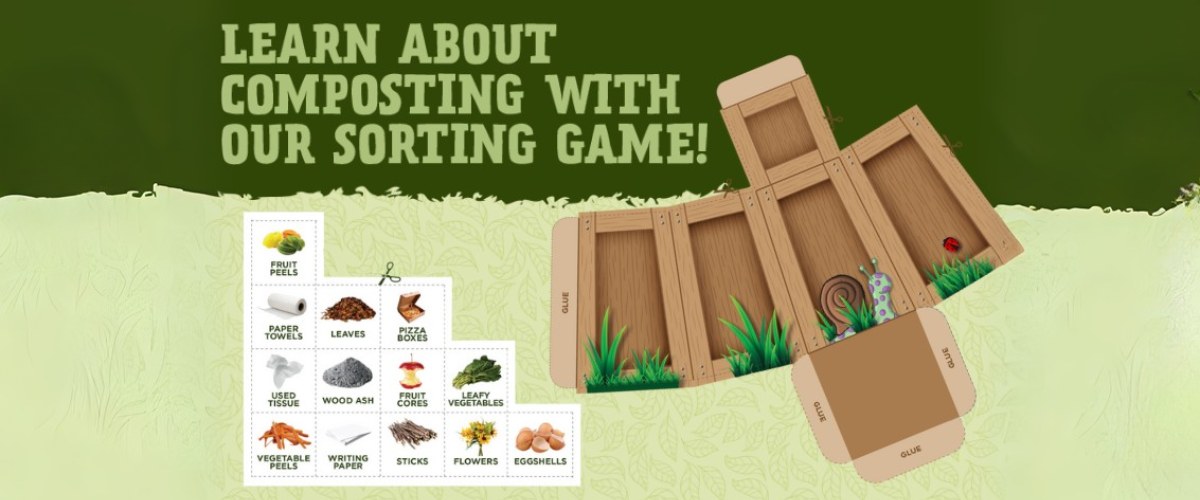
Develop your composting skills or test the knowledge of whānau and friends by printing out and playing this compost sorting game.

Want help with composting?
Rotorua Lakes Council offers free composting workshops to help get you started or strengthen composting systems you may already have underway.
Email us at recycling@rotorualc.nz for more information or help with any composting questions.

